
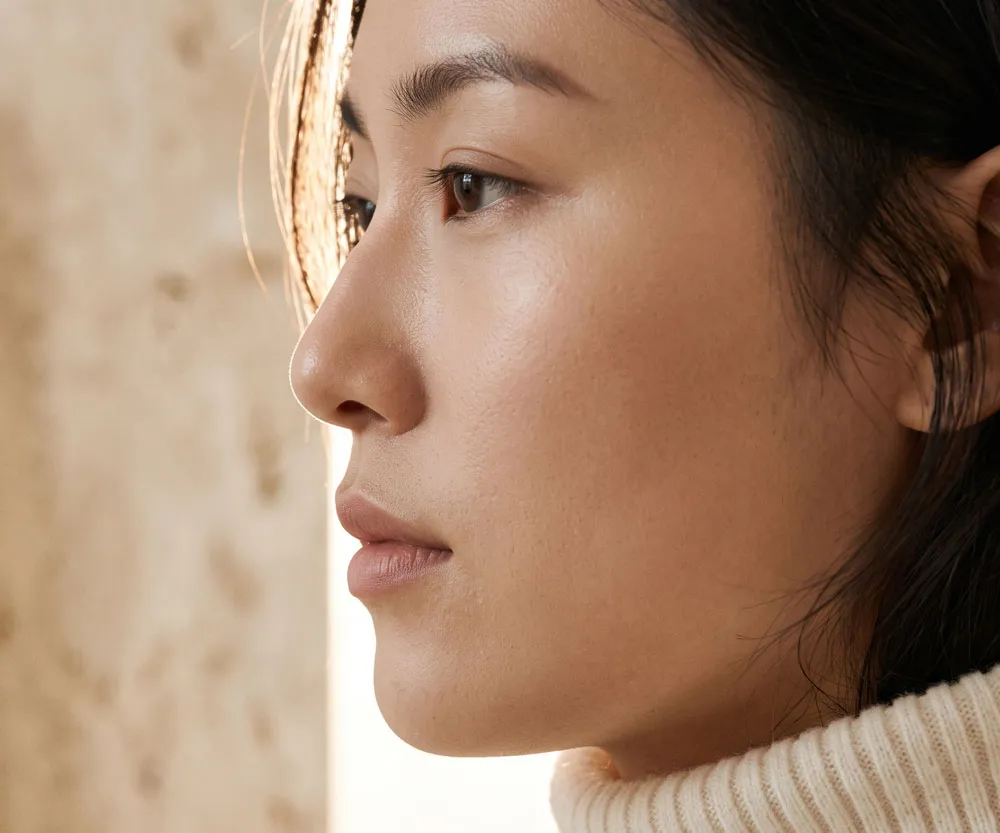
Improve facial balance by correcting features such as a prominent hump, broad or crooked nose, drooping or bulbous tip, wide nostrils, or asymmetry and improve nasal function.
Rhinoplasty is a sophisticated procedure designed to enhance facial harmony by changing the proportions of the nose. It can be performed for aesthetic reasons, such as reducing a dorsal hump, refining a bulbous tip, or straightening a deviation, as well as for functional reasons like correcting a deviated septum or removing an obstruction, to restore optimal nasal breathing.
Dr. Gus Hoogendyk approaches rhinoplasty with an architectural mindset, favouring modern structural and preservation rhinoplasty techniques. This ensures that the delicate nasal cartilage and bone are reshaped with precision without compromising the structural integrity of the airway. His objective is to create a nose that appears perfectly balanced with your unique facial features.
“A beautiful nose does not draw attention to itself, but rather elevates the eyes and overall harmony of the face.”
Brings the size and width of the nose into aesthetically pleasing alignment with other facial features.
Smooths out visible dorsal humps or depressions on the bridge for a sleeker side profile.
Corrects internal deviations and structural abnormalities to significantly enhance breathing airway flow.
Refines and elevates droopy, bulbous, or asymmetrical nasal tips to create elegant definition.
Modern grafting techniques ensure the newly shaped nose remains structurally sound for a lifetime.
Results are highly customised so that the nose fits your specific face, ethnicity, and gender beautifully.
Each stage is designed around your comfort, safety, and outcome. Dr. Gus walks every patient through this process in detail during your fully private consultation.
Rhinoplasty recovery is generally not painful, though patients will experience congestion and visible swelling.
Periorbital bruising and swelling are usually most prominent during the first 2–3 days and then gradually improve. The nose feels blocked because of internal swelling, crusting and/or splints. Mild bloody discharge is common initially. Pain is usually mild–moderate and improves rapidly. Sutures are generally removed around day 7.
Most bruising has resolved. Considerable nasal swelling persists, particularly at the tip. Most patients are socially presentable by 10–14 days and can return to office-type work. Nasal breathing gradually improves. Strenuous exercise and any risk of trauma to the nose should still be avoided. Sleep elevated and avoid nose blowing, bending, straining and exercise.
Most obvious signs of surgery have disappeared. The bridge becomes more defined, although the tip remains swollen, firm and sometimes slightly upturned. Numbness of the tip and upper lip can persist. Light exercise can usually be introduced depending on healing and the surgeon’s protocol.
The best candidates are physically healthy individuals looking for aesthetic or functional improvement of their nose.
You may be a candidate if you:
Breast Augmentation
To increase the perceived size, restoring structural tone and vitality to the upper torso for a fuller, more balanced feminine form.
“For years, I felt that my silhouette didn’t quite match my active lifestyle. I wanted a change, but I was terrified of looking ‘overdone’ or artificial. Dr. Gus set my mind to rest. His approach turned out to be so considered the recovery was smoother than I anticipated, but the real impact was the confidence. For the first time, I feel completely at home in my own skin. I am just about the surgery. It was about the care and the precision behind it.”
— Dana S, Zurich
A primary rhinoplasty typically takes 4 – 5 hours, whereas complex cases may take more time.
Performed under general anaesthesia to ensure the airway is protected and the patient is perfectly still.
Incisions are internal or involve a tiny incision across the columella that heals virtually imperceptible
Desk work resumes after one week. Strenuous exercise and sport must be avoided for 6 weeks.
12–18+ months: tip refinement may continue, particularly with thick skin or extensive tip work.
A private, no-obligation consultation with Dr. Gus is the first step. Come with questions, leave with clarity. We keep availability limited to ensure every patient receives undivided attention.